Basic Water Closet (Toilet) Types
The most common type of toilet, especially in homes, consists of a tank and a bowl, whether in two separate pieces or a single molded unit. However, some toilets don't have a tank, but instead have a large, exposed flushing mechanism often referred to as a flushometer (such as those made by Sloan or Delany). Flushometers come up from the toilet bowl and back into the wall and can either be concealed inside the wall entirely, or exposed.
(Flushometer-type toilets are more common in commercial applications, such as restaurants, department stores, & stadiums but can sometimes be found in homes as well. Repairing this type of flush valve is often unique to the manufacturer of
the valve, as the internal parts (and causes of their problems) do vary. If you are trying to repair a flushometer valve, it is best to first consult with the manufacturer so that they can help you trouble-shoot the problem and determine the best way to repair it. We do carry many parts for Delany flush valves, as well as many parts for Sloan flush valves.
General Trouble-Shooting
If your toilet has a tank and water is constantly running or the trouble you are experiencing is the periodic sound of water filling your toilet tank (often accompanied by the sound of trickling water in the toilet), then water is exiting the tank and entering the bowl. There are generally four main culprits that will cause a "running" toilet (water runs constantly or intermittently when the toilet is not in use):
- Problems with the flapper
- Problems with the fill valve
- Problems with the flush valve
- Problematic flush lever assembly
It is usually easy enough to determine if any of these are the issue by looking inside the tank and then flushing the toilet. Take special care when you remove your tank lid because they are extremely fragile, can be heavy and are usually slippery when wet.
Flush the toilet, let the water exit into the bowl and wait for the tank to refill. If the flapper (or tank ball) does not stop the water from exiting from the tank into the bowl by properly seating back down onto the flush valve, then the problem is most likely your flapper, tank ball or problematic flush lever assembly.
If the flapper or tank ball seals the flush valve successfully but water is still continuously filling into the tank (and subsequently into the bowl through the toilet tanks overflow tube), then the problem could be that your fill valve is not adjusted correctly allowing your tank to overfill with water.
Constant Running Toilet
No matter what part of the house you're in, if you hear running water (and the sprinklers aren't on), then you should probably check your toilet. This is normally caused by water continuously running out of the tank and into the bowl, and keeping your fill valve from shutting off.
Check the Flapper or Tank Ball: The best place to start is by checking the flapper, tank ball or flush valve. These are the most common areas for problems to begin. When replacing or repairing the flush valve and its parts, make sure to turn the water to your toilet off. The shut-off valve is typically located behind the toilet.
First, check the rim of the flush valve where the flapper or tank ball rests to seal the water in the tank. Is it smooth, or are there chips or rough spots? A rough, eroded or chipped flush valve can certainly cause your toilet to run and should be replaced if the rim has been compromised. If the rim of the flush valve appears to be nice and smooth but water is still passing by the flapper or tank ball and flowing into the bowl, then a bad flapper or tank ball is likely the cause of the problem.
A bad flapper or tank ball (possibly cracked) can fill with water when the tank is emptying causing the flapper or tank ball to close prematurely. They can also become misshapen or deteriorated, preventing the necessary seal and allowing water to pass through to the bowl. There are many different types of flappers and tank balls, and some flush valves use a
cylinder with a flat seal, so the method of repair will vary from toilet to toilet.
If your toilet has a flapper that attaches to a flush lever arm/rod by a chain, it's important to make sure the chain is correctly adjusted so it isn't too tight or too loose. If the chain is too tight, the flapper will allow water to run into the bowl because it can't seal itself sufficiently onto the rim of the flush valve. If the chain is too loose, the flapper won't be pulled up enough to stay open, thus not allowing the water to flush into the tank. Or, the chain can get lodged between the flapper and the rim of the flush valve causing the flapper to stay open and water to run into the bowl. The chain should have just a slight bit of slack in it, typically around a half-inch. If there is excess chain left once it has properly been adjusted, then cut the excess chain off with pliers or wire cutters.
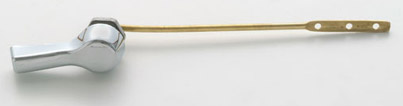
Check the Flush Lever Assembly: Is the flush lever (also called a "trip lever") tightly secured to the wall of the tank? If not, try reaching into the tank and tightening the lock nut to be sure (hand tightening is ok and helps prevent the possibility of cracking your china/porcelain). A flush lever lock-nut usually tightens opposite from standard nuts, so reach in and turn the nut from right to left. Check and make sure all of the parts of the flush valve lever are intact and are not bending or coming apart from each other. If the flush lever appears to be in bad shape, you may just need to replace it with a new flush lever assembly. When you push on the trip lever does it stay stuck in the up position, preventing the flapper from dropping and closing correctly? If so, then you will need to replace your flush lever.
Check the Fill Valve: When the flush lever is working correctly and the flush valve is sealed properly but water continues to fill the tank and exit into the bowl through the overflow tube then check the fill valve.
Toilet tanks have an overflow tube to prevent water from spilling over the top of the tank and onto the floor, but a fill valve is designed to shut off the water flow (when the toilet tank is full) to prevent the tank from over-filling (thus not allowing water to continuously exit the tank and into the bowl through the overflow tube). If your fill valve is not shutting off the water once the tank is sufficiently full, the problem may be with your toilet fill valve. This could be caused by dirt or debris in the valve, or it may be the fill valve needs to be repaired or replaced.
To inspect the fill valve to see if it can be repaired, you must first turn off the water. The shut-off valve can usually be found behind the toilet. If you have the type of fill valve that uses a float ball (which closes the valve when it rises) then first check and make sure the float ball doesn't have any cracks in it. If a float ball has water inside of it, it could be too heavy for the fill valve to lift in order to shut off the incoming water, causing the toilet to constantly run. It is also a good idea to make sure the float ball and rod aren't sticking, in which case you would most likely need to repair or replace the fill valve).
There are also fill valves that do not use a conventional float ball to shut off the valve. Instead, they are canister-type fill valves (such as the Fluidmaster #400A) which have a chamber that rises up the body of the fill valve to shut off the water supply. Over time, this type of float chamber can stick. If you are unable to stop it from sticking, then you should either repair or replace the valve.
Check the internal seals of your flush valve to make sure they are in good shape. If they're ripped or disintegrating, you can try to locate replacement parts for your fill valve. Please note that not all fill valves are the same and are manufactured by different companies. Make sure to order repair parts for your specific valve.
To check for dirt/debris, you can try removing the top cap from the fill valve (if your fill valve has a cap that can be removed) and the loose washers and parts from the inside of the valve. Look at the seals to confirm they are in good shape. Make sure to take notice of how you removed the parts so that you will be able to replace them later. Grab a plastic cup or similar vessel, place it directly over the center of the fill valve, and then slowly and carefully turn the water back on (low); the water will flow out through the center of the fill valve and should remove any debris from inside the valve. Next, turn the water back off so that you can re-install your fill valve parts and seals. Re-install the top assembly and turn the water back on. If the fill valve shuts off when the tank is full, then it would appear the problem has been fixed.
If you have replaced the flapper or tank ball (or determined the flapper or tank ball & flush lever are not the problem) and/or your attempt at repairing your fill valve was unsuccessful, you will most likely need to purchase a new fill valve. Pay careful attention to the type of fill valve that is used in your toilet, as again, some toilets require unique components that the manufacturer made specifically for their toilet models. It may be a good idea to contact the manufacturer of your toilet for their repair advice as well.
Occasional Running Toilet
If you hear your toilet mysteriously turn on and run for a few seconds (while no one else is using it), then shut itself off, but then again comes back on after a bit, you most likely have an occasional running toilet. This should not be confused with a ghost in the house.
The most common cause of this problem is the flapper or tank ball. When your flapper or tank ball is going bad, it won't seal well and can allow water to slowly seep past into the bowl; when the water level reaches a certain level, the fill valve will kick on and refill the tank to a level that shuts it back off. It is also important to check the condition of your flush valve rim, because any erosion or debris stuck on it can be responsible for a slow leak.
If you have a two-piece toilet, a worn out gaskets inside of the tank can cause your toilet to run occasionally. The flush valve seal, or the tank to bowl bolt washers wear out over time and either deteriorate or harden and crack causing the tank to leak very slowly.
This is why it can take a while for enough water to leak out of the tank, causing the float to drop, and turn the fill valve on to refill the tank. Unfortunately, to replace these seals or washers, you will need to disassemble the toilet tank from the toilet bowl.
These types of leaks can be difficult to pinpoint since the water can leak out of the tank and onto the bowl portion hidden by the tank. All bowls are unintentionally made slightly different due to how porcelain is manufactured. One bowl may have a low side towards the front of the bowl inlet hole, and another bowl may have a low side towards the back of the bowl inlet hole, or another one may have the low side on one of the sides of the bowl inlet hole.
Water will naturally flow to the lowest point. Adding food coloring to the inside of the tank can help you determine where the leak is actually occurring.
When replacing a faulty seal beneath the flush valve, make sure to turn the water to your toilet off. The shut-off valve is typically located behind the toilet. At this point, since you will be taking the tank off of the bowl, you should also replace the tank to bowl bolts and washers and also the tank to bowl gasket. The tank to bowl gasket is located between the tank and bowl and fits over and/or around the bottom of the flush valve.
The Fluidmaster 400A fill valves can also be the culprit of an occasional running toilet. The Fluidmaster 400A fill valves include a clip that must be used when attaching the 1/4" refill tube to the flush valve overflow tube. Do not just stick the 1/4" refill tube into the overflow. If you do the valve will begin to siphon water from the tank and put it into the overflow tube causing the valve to go on and off every so often by itself.
Please note: The information provided above is GENERAL information only and is intended to address the common problems with most toilets that do not use manufacturer-specific parts. We provide this information to assist with simple toilet repairs. If you are uncertain of the type of parts your toilet requires, we strongly recommend you contact the manufacturer of your toilet or perhaps consult with a local plumber for their professional advice.
